 similarminds.com
Computer Science
: 9.4% list this entry, compared with 2.0% outside the type. That is 4.60 times the listing rate, a 7.3-percentage-point gap (39 of 417 profiles).
Historical Facebook research · 256 personality profiles
Education concentrations describe recorded fields of study. They do not establish degree completion, educational attainment, occupation or performance.
Eight COMPILER dimensions define the type codes. The same weighted factor scores and fixed global cutoffs are applied to every category; only the recorded preference field changes.
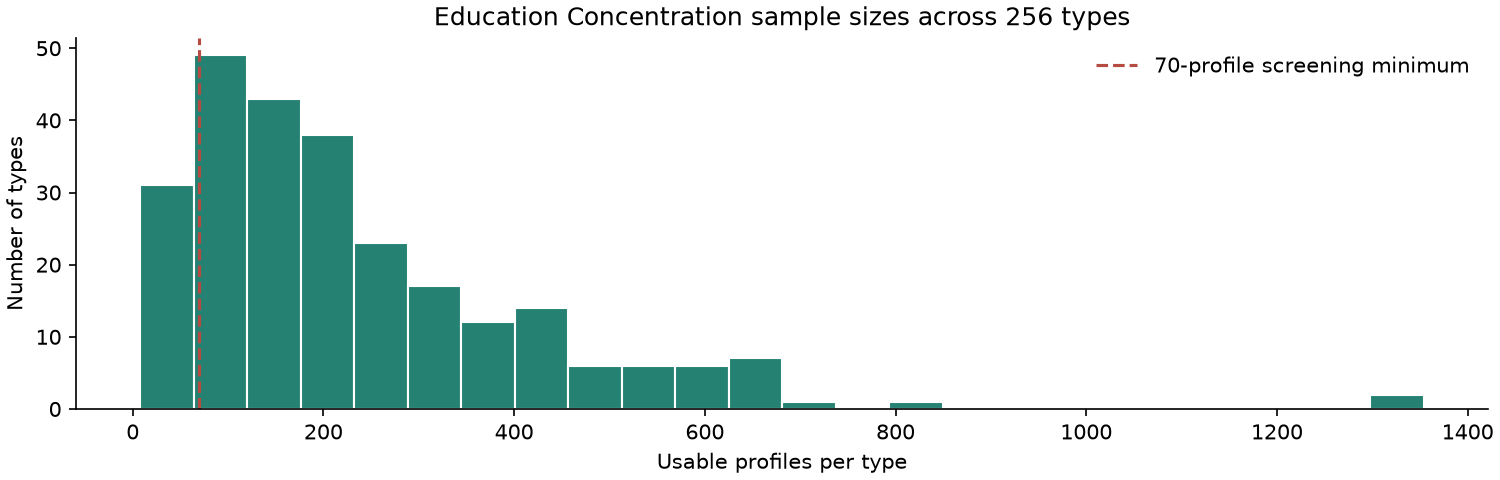
60,343 profiles have usable data for this comparison. Type samples range from 8 to 1,354, with a median of 186.
221 of 256 types meet the 70-profile sample minimum. 21 have at least five qualifying distinctive entries; 0 have twenty.
These are historical, unadjusted associations, not individual predictions. A missing mention is not a dislike. Age, gender, geography and list length may contribute to differences.
These examples require at least 25 mentions in a type of at least 300 profiles, in addition to the common screening rules. They are examples with larger cells, not a claim of independent replication.
: 9.4% list this entry, compared with 2.0% outside the type. That is 4.60 times the listing rate, a 7.3-percentage-point gap (39 of 417 profiles).
: 3.8% list this entry, compared with 0.9% outside the type. That is 4.37 times the listing rate, a 2.9-percentage-point gap (51 of 1,354 profiles).
: 3.5% list this entry, compared with 1.0% outside the type. That is 3.60 times the listing rate, a 2.5-percentage-point gap (47 of 1,354 profiles).
Common concentration entries supply the catalog. Multiple listed concentrations can match multiple entries. Generic one-word entries require standalone list boundaries; a specialism is not automatically merged with its broader field. Subject preferences can overlap with intellectual or artistic questionnaire content.
COMPILER uses the original proposed pole names below. These are provisional shorthand for broader dimensions, not clean logical opposites, abilities, diagnoses or judgments of worth.
| Position | Higher factor score | Lower factor score | Meaning |
|---|---|---|---|
| 1 | C: Caregiving | A: Autonomy | Prioritizing care for others and family or close relationships. |
| 2 | O: Openness | T: Traditionalism | Intellectual, imaginative and artistic exploration. |
| 3 | M: Materialism | F: Frugality | Placing importance on appearance, money and expensive consumption, not actual wealth. |
| 4 | P: Prudence | S: Spontaneity | Orderliness, caution and deliberate self-control. |
| 5 | I: Intimacy | G: Guardedness | Emotional openness, accepting help and interpersonal trust. |
| 6 | L: Leadership | Y: Yielding | Wanting to lead or control and being comfortable with confrontation, not leadership skill. |
| 7 | E: Equanimity | V: Volatility | Emotional calm and steadiness rather than a strong need for reassurance. |
| 8 | R: Religiosity | N: Nonreligiosity | Religious faith and conventional restraint. |
In particular, Autonomy does not mean an inability to care; Frugality is broader shorthand here than thrift alone; Leadership includes control/confrontation preferences rather than demonstrated skill.
The catalog contains 86 entries. Distinctive rankings require at least 70 usable profiles in a type, 200 mentions overall, 10 in the type, 50 outside it, and at least three in each deterministic half. Listing-rate lift must be at least 1.25, the absolute gap at least 0.25 percentage points, and the direction positive in both halves.
Lift compares the selected type with everyone outside it in the same usable category cohort. Lists can contain fewer than twenty entries. The split-half rule screens consistency; it is not external validation or a multiple-testing guarantee. Larger ratios based on ten or twelve mentions remain uncertain.
Each person counts at most once per matched entry, but can match several entries. Common whole-field dislike/negation phrases are conservatively screened out of preference fields. Education concentrations are not dislike-screened. The matching catalogs are not exhaustive and may miss languages, aliases or prose descriptions.
The factor model combines 35 original trait scores. Each of its eight global cutoffs splits 253,717 eligible historical profiles into 126,859 higher and 126,858 lower scores. Marginal balance does not guarantee equal-sized combinations. The source spans 2008–2011; it is not a representative sample of current tastes or the general population.
Download aggregate rankings CSV · Aggregate results · Full scoring and matching methods
| Type | Usable profiles | Qualifying entries |
|---|---|---|
| 1,354 | 13 | |
| 1,304 | 8 | |
| 846 | 5 | |
| 718 | 13 | |
| 676 | 11 | |
| 666 | 6 | |
| 665 | 8 | |
| 652 | 4 | |
| 642 | 8 | |
| 636 | 12 | |
| 632 | 7 | |
| 623 | 12 | |
| 617 | 3 | |
| 603 | 8 | |
| 586 | 6 | |
| 582 | 4 | |
| 574 | 11 | |
| 562 | 3 | |
| 556 | 0 | |
| 542 | 3 | |
| 539 | 10 | |
| 530 | 3 | |
| 529 | 4 | |
| 499 | 4 | |
| 489 | 1 | |
| 469 | 5 | |
| 462 | 6 | |
| 459 | 5 | |
| 457 | 1 | |
| 451 | 1 | |
| 451 | 6 | |
| 448 | 0 | |
| 442 | 4 | |
| 440 | 4 | |
| 436 | 4 | |
| 433 | 3 | |
| 429 | 4 | |
| 422 | 2 | |
| 421 | 3 | |
| 418 | 6 | |
| 417 | 4 | |
| 411 | 3 | |
| 403 | 0 | |
| 398 | 1 | |
| 396 | 1 | |
| 391 | 2 | |
| 386 | 4 | |
| 386 | 2 | |
| 384 | 4 | |
| 383 | 3 | |
| 372 | 3 | |
| 366 | 5 | |
| 358 | 0 | |
| 355 | 2 | |
| 347 | 1 | |
| 341 | 1 | |
| 341 | 3 | |
| 339 | 3 | |
| 337 | 2 | |
| 334 | 0 | |
| 334 | 3 | |
| 325 | 3 | |
| 322 | 4 | |
| 320 | 2 | |
| 314 | 1 | |
| 313 | 0 | |
| 308 | 1 | |
| 308 | 0 | |
| 303 | 1 | |
| 300 | 3 | |
| 300 | 2 | |
| 299 | 2 | |
| 288 | 2 | |
| 281 | 1 | |
| 280 | 0 | |
| 278 | 1 | |
| 269 | 0 | |
| 267 | 1 | |
| 267 | 1 | |
| 266 | 2 | |
| 263 | 0 | |
| 262 | 1 | |
| 261 | 1 | |
| 259 | 3 | |
| 257 | 1 | |
| 252 | 1 | |
| 251 | 0 | |
| 250 | 1 | |
| 249 | 1 | |
| 243 | 0 | |
| 238 | 0 | |
| 236 | 0 | |
| 234 | 3 | |
| 233 | 1 | |
| 233 | 0 | |
| 232 | 2 | |
| 226 | 0 | |
| 226 | 2 | |
| 226 | 2 | |
| 224 | 2 | |
| 224 | 0 | |
| 222 | 0 | |
| 221 | 1 | |
| 221 | 1 | |
| 219 | 1 | |
| 219 | 0 | |
| 219 | 0 | |
| 217 | 2 | |
| 215 | 2 | |
| 209 | 0 | |
| 209 | 2 | |
| 208 | 0 | |
| 208 | 0 | |
| 206 | 2 | |
| 206 | 0 | |
| 206 | 0 | |
| 205 | 0 | |
| 203 | 1 | |
| 202 | 1 | |
| 201 | 2 | |
| 200 | 0 | |
| 196 | 1 | |
| 196 | 2 | |
| 192 | 0 | |
| 191 | 0 | |
| 190 | 1 | |
| 189 | 1 | |
| 187 | 0 | |
| 186 | 1 | |
| 182 | 0 | |
| 182 | 0 | |
| 181 | 0 | |
| 180 | 0 | |
| 176 | 0 | |
| 176 | 1 | |
| 173 | 0 | |
| 173 | 2 | |
| 168 | 1 | |
| 164 | 0 | |
| 163 | 1 | |
| 162 | 1 | |
| 162 | 0 | |
| 162 | 1 | |
| 159 | 0 | |
| 158 | 0 | |
| 158 | 0 | |
| 157 | 1 | |
| 157 | 0 | |
| 149 | 0 | |
| 149 | 0 | |
| 149 | 0 | |
| 148 | 0 | |
| 147 | 0 | |
| 146 | 1 | |
| 144 | 0 | |
| 143 | 0 | |
| 142 | 1 | |
| 142 | 0 | |
| 140 | 0 | |
| 138 | 1 | |
| 138 | 0 | |
| 138 | 0 | |
| 134 | 0 | |
| 134 | 0 | |
| 132 | 0 | |
| 132 | 0 | |
| 128 | 0 | |
| 128 | 0 | |
| 127 | 1 | |
| 126 | 0 | |
| 126 | 0 | |
| 124 | 0 | |
| 124 | 0 | |
| 124 | 0 | |
| 123 | 0 | |
| 122 | 0 | |
| 119 | 0 | |
| 118 | 0 | |
| 118 | 0 | |
| 116 | 0 | |
| 116 | 0 | |
| 115 | 1 | |
| 115 | 0 | |
| 113 | 0 | |
| 113 | 0 | |
| 112 | 0 | |
| 111 | 0 | |
| 111 | 0 | |
| 110 | 0 | |
| 109 | 0 | |
| 109 | 0 | |
| 108 | 0 | |
| 108 | 0 | |
| 108 | 0 | |
| 107 | 1 | |
| 105 | 0 | |
| 105 | 0 | |
| 102 | 0 | |
| 99 | 0 | |
| 99 | 0 | |
| 97 | 0 | |
| 94 | 0 | |
| 94 | 1 | |
| 93 | 0 | |
| 92 | 0 | |
| 90 | 0 | |
| 87 | 0 | |
| 86 | 0 | |
| 85 | 0 | |
| 85 | 0 | |
| 82 | 0 | |
| 78 | 0 | |
| 78 | 0 | |
| 75 | 0 | |
| 75 | 0 | |
| 75 | 0 | |
| 74 | 0 | |
| 74 | 0 | |
| 73 | 0 | |
| 72 | 0 | |
| 70 | 0 | |
| 68 | 0 | |
| 66 | 0 | |
| 65 | 0 | |
| 65 | 0 | |
| 63 | 0 | |
| 62 | 0 | |
| 61 | 0 | |
| 60 | 0 | |
| 59 | 0 | |
| 58 | 0 | |
| 57 | 0 | |
| 55 | 0 | |
| 55 | 0 | |
| 51 | 0 | |
| 46 | 0 | |
| 44 | 0 | |
| 42 | 0 | |
| 41 | 0 | |
| 41 | 0 | |
| 40 | 0 | |
| 39 | 0 | |
| 39 | 0 | |
| 36 | 0 | |
| 36 | 0 | |
| 35 | 0 | |
| 35 | 0 | |
| 33 | 0 | |
| 30 | 0 | |
| 28 | 0 | |
| 24 | 0 | |
| 18 | 0 | |
| 18 | 0 | |
| 16 | 0 | |
| 15 | 0 | |
| 8 | 0 |
Explore your profile with the experimental 63-item assessment: 56 new items and seven MOTIVES comparison items.
Take the COMPILER Short TestVersion 0.1. New-questionnaire scores are provisional and are not calibrated to the historical Facebook cutoffs.