 similarminds.com
Personality archetypes · Exploratory
Experimenter
The Experimenter wants to see what happens when something changes. A familiar method can be a starting point for trying another version, comparing the results, and finding out what else is possible.
How experimentation shows up
Someone says a weekly meeting feels stale. One person explains why, another suggests canceling it, and the Experimenter proposes trying a fifteen-minute version next week. They want to know what the shorter meeting changes. The same person might rearrange a room to see whether they actually use it differently, or redo a familiar recipe with one ingredient swapped.
The common thread is a preference for learning by varying what you do. Some Experimenters like a clean comparison and keep careful notes. Others want to put an idea in motion before deciding whether it deserves a closer look. Someone can question a routine in one part of life and rely on a dependable routine in another.
This tendency can pay off when the usual approach has stopped working or a change is easy to reverse. It can cause friction when other people depend on a stable routine. An Experimenter may be ready to try a third version while everyone else is still learning the second. Changing several things at once can also make the result hard to interpret.
The Experimenter in history
These episodes illustrate the tendency at work. Each describes a documented choice and an interpretation of that choice.
Wilbur and Orville Wright
Testing wing shapes after a disappointing glider season
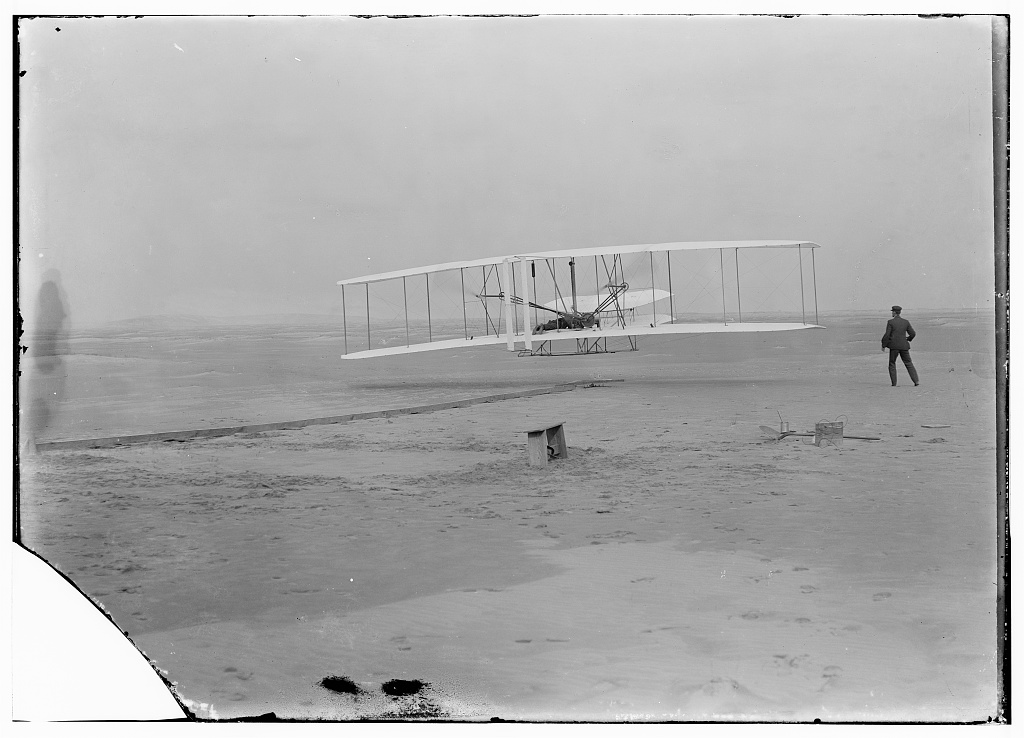
The Wrights’ early gliders produced less lift than their calculations predicted. In 1901, the brothers built a wind tunnel and instruments to compare model wings. They recorded formal measurements for nearly fifty shapes and used what they learned in designing their next glider.
The archetype shows up in their response to a mismatch. They built a way to vary the wing and see what changed. The careful record keeping also illustrates how strongly experimenting can coexist with planning.
Smithsonian National Air and Space Museum on the Wrights’ research
Julia Child
Testing the instructions as well as the food
Cookbook editor Judith Jones recalled that she had trouble understanding a draft of Child’s puff pastry instructions. Child handed her a rolling pin and watched her attempt the recipe. Where Jones faltered, Child adjusted the instructions. Paul Child photographed the difficult steps for the illustrator.
Here the experiment is about teaching. Child could see whether the recipe worked for a reader by watching someone use the words on the page. The outcome that mattered was whether another person could reproduce the technique at home.
The Experimenter in fiction
Ms. Frizzle
The Magic School Bus · Books and television
In the first book, Ms. Frizzle takes her class through the city’s waterworks in a shrunken bus. Across the series, she repeatedly puts students in situations where they can encounter the science for themselves. She uses unusual experiences to make ordinary questions worth investigating. Her experimentation is directed toward what other people can discover.
Scholastic’s guide to the original books · Scholastic’s series overview
Hiccup
How to Train Your Dragon · 2010 animated film
Hiccup builds Toothless a replacement tail fin and learns to operate it as they fly together. The problem gives him something to try, watch, and adjust. His experiments also change what he knows about dragons. By spending time with Toothless and seeing how he responds, Hiccup begins to question what his village has taught him.
Willy Wonka
Charlie and the Chocolate Factory · Roald Dahl’s novel
In the Inventing Room, Wonka describes a sweet meant to last indefinitely and says that a trial is already underway. The factory gives him room to pursue ideas that would sound absurd anywhere else. The same appetite for novelty creates problems when visitors get close to unfinished products. Wonka is an example of how the urge to see what happens can outrun concern for who might have to deal with the outcome.
The Roald Dahl Story Company’s excerpt from chapter 19 (PDF)
What the low end looks like
Someone low in Experimenting tends to stick with a method that already works and change it when there is a reason to. At a busy restaurant, for instance, they might like to keep a dependable preparation method during service. Changing it later, when there’s time to train people and see the effect, may suit them better.
The choice is most revealing when the person has real options. A single scene can show that a character followed procedure. A pattern of choosing the familiar even in low-stakes situations gives you more reason to put Experimenter on the low side of their portrait.
How it fits in a type
A person has a score on each of 17 archetype dimensions. The type line shows the two highest and the two lowest, with the lows in brackets. Capitals mark unusually high or low scores.
PLANNER/Experimenter [MYSTIC/Conservative]
Planner and Experimenter are the two highest scores. Mystic and Conservative are the two lowest. Planner meets the 88th-percentile cutoff for a standout high, and Mystic meets the 12th-percentile cutoff for a standout low.
An Experimenter who likes to plan ahead might try two ways of expanding a public program and choose in advance what to track. With lower Mystic and Conservative scores, they may chalk up a lucky start to chance and welcome advisers from abroad having a say in how their country expands the program.
When reading a fictional character, look for repeated choices and for the motives the story gives you. Hiccup’s work with Toothless supports a reading of Experimenting. It gives you little basis for filling in some of his other scores. In a character reading, leave those scores open.